

The beginning of parish registers in our provinces.
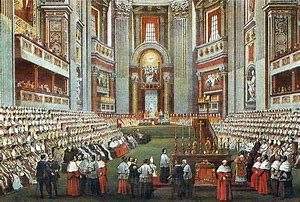
Faced with criticism from the reformers and the growth of matrimonial legislation in Protestant states, the principle of compulsory ecclesiastical celebration and the keeping of corresponding registers were established. The Council from Thirty has greatly reduced the importance of engagement. Before the CouncilAs a result, an engagement followed by sexual relations was effectively transformed into a marriage. The Council from Thirty in 1563 issued general prescriptions on how to keep registers of baptisms and marriages. The canons of the decree " Tametsi " on the solemnity of marriage are clear: only explicit and solemn consent expressed in the present tense (I take you as my wife) constituted marriage. Even performed in Church, or in front of the Church. The decree clearly stated that a marriage was null and void if it was not celebrated in the presence of the parish priest and two or three witnesses, preceded by the publication of banns and accompanied by the keeping of marriage registers. The bishops left their application to the provincial synods. These provisions were supplemented in 1614 by the "Rituale Romanum from Paul V for deaths. From this time onwards, episcopal orders requiring them to be kept multiplied. However, most parishes did not open registers until after 1600, or even after 1650. The oldest baptismal registers in our country date back to 1565; they are from the parish of Sainte-Gudule and the church of La Chapelle, and are kept in the Archives of the City of Brussels. Council from Thirty.
Towards the Council of Trent - Sessions 1 to 8 (13/12/1745 - 17/09/1547)
2019 Heraly Yves - GéniWal Magazine n° 21, 2004 all rights reserved


