

From parish registers to current civil status :
The general parish framework for Belgium
The oldest known Belgian parish registers date back to 1406 for Brussels, 1504 for Saint-Denis (Mons district), 1507 for Nivelles, 1515 for Huy (Namur district), 1519 for Mechelen, 1527 for Antwerp and 1540 for Leuven.
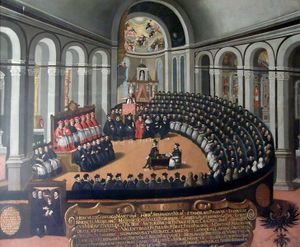
Meeting of the Council of Trent in the Basilica of Santa Maria Maggiore, Diocesan Museum of Trent (Italy).
But it was not until the Council of Trent (1545-1563) that general regulations on marriage were established. With the decree Tamesti enacted on 11 November 1563, marriage had to be contracted in the presence of a priest and two or three witnesses, preceded by the publication of banns and recorded in a marriage register. At that time, the registers were written in Latin; they were basic, even incomplete, but it would be more than 50 years before they were almost universally used, as some parishes had not followed the trend.
In the XVIIe century, the Archdukes Albert and Isabella of Spain in turn overhauled the whole of civil law with the perpetual edict of 12 July 1611. This marked a turning point in the management of parish registers. This text stipulated in particular that "the Gens de Loi of the villages should make a duplicate of the said registers and send them to the Greffes des villes, Bailliages et, Châtellenies".
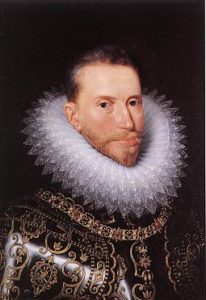
Archduke Albert of Austria
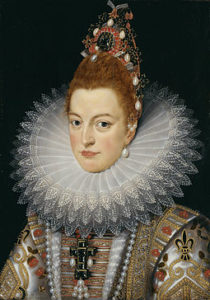
The Infanta Isabelle-Claire-Eugénie of Austria
Pope Paul V in 1614 completes the provisions of the Council of Thirty with the rituale Romanun on the keeping of burial registers.
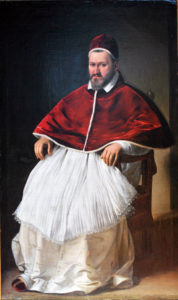
Pope Paul V
Charles de LorraineIn 1736, the governor general of the Austrian Netherlands from 1744 to 1780, ordered the parish priests to issue a duplicate copy of the registers to the communal authorities or aldermen.
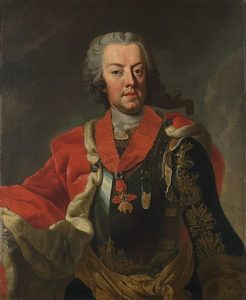
Charles-Alexandre de Lorraine
Under the Edict of Maria Theresa of Austria From 06 March 1754, and from that date only, the records include the names of fathers and mothers, the designation of previous marriages and the dates and places of burial.It was not until the edict of 6 August 1778 that parish priests wrote baptism, marriage and burial certificates in a uniform manner. Empress Maria Theresa demanded that it be applied on 1/01/1779 and that registers be kept in duplicate (double Theresian).
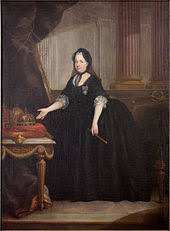
Maria Theresa of Austria in 1759
Joseph IIOn 25 September 1784, his son promulgated an edict concerning civil marriage. He thus liberalised civil law. The beginnings of the civil state we know today in Belgium were born.
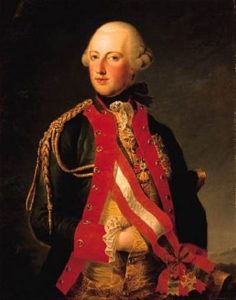
Joseph II (Holy Roman Emperor)
This edict was revoked by Leopold IIhis brother, on 12 February 1790. This decision greatly satisfied many people: as one parish priest wrote in his parish register, "God be praised, then, for he put many people to the trouble of convincing themselves of this. All we have to do is look at the Holy Council of Trent on marriage".
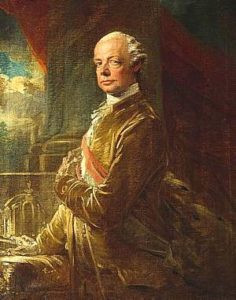
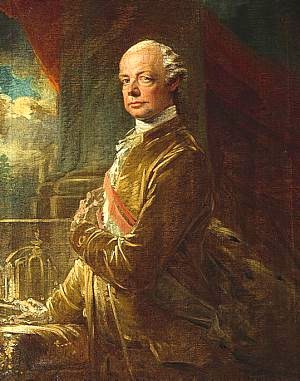
Portrait of Leopold II, circa 1790.
The Austrian Netherlands were annexed by the French Republic in 1795. The French regime imposed a complete reorganisation, putting an end to the use of parish registers on 20 September 1792. The law of 30 August 1798 (13 fructidor year IV) required marriages to be celebrated in the county town and only on decadal days. The decree of 26 July 1800 [7 thermidor year VIII] re-established the separation of marriages in all places.
In what is now Belgium, civil status records were transcribed into French from 1815; from that date onwards, civil registrars drew up records in Dutch for the northern part of the country (Flanders) and in French for the southern part (Wallonia).
It was only after the First World War (1914-1918) that the cantons of Eupen and Malmédy became part of Belgium. Deeds were written in Gothic German, which required genealogists to have a special knowledge of this script in order to be able to read the archives. The Royal Decree of 31 December 1851 set out the formalities for drawing up the annual alphabetical tables in compliance with the decree of 20 July 1807 of the Republican era.
The law of 10 May 1865 required the keeping of filial alphabetical tables of old parish registers concerning
25,000,000 deeds.
Belgium has three national languages, French, Dutch and German. Before 1779, parish registers were written in Latin. Birth, marriage and death records are transcribed in the Manuel de Paléographie Nord-Pas-de-Calais Flandre et Wallonie,
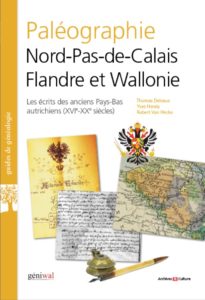
Writings from the former Austrian Netherlands (16th - 20th centuries) available in our shop at the price of 19 €.
Sources :
https://fr.wikipedia.org/wiki/Albert_et_Isabelle
https://fr.wikipedia.org/wiki/Paul_V
https://fr.wikipedia.org/wiki/Statue_de_Charles_de_Lorraine
https://fr.wikipedia.org/wiki/Marie-Th%C3%A9r%C3%A8se_d%27Autriche_(1717-1780)
https://fr.wikipedia.org/wiki/Joseph_II_(empereur_du_Saint-Empire)
https://fr.wikipedia.org/wiki/L%C3%A9opold_II_(empereur_du_Saint-Empire)


